Why DeFi System Yields Decay
Even Without Hacks
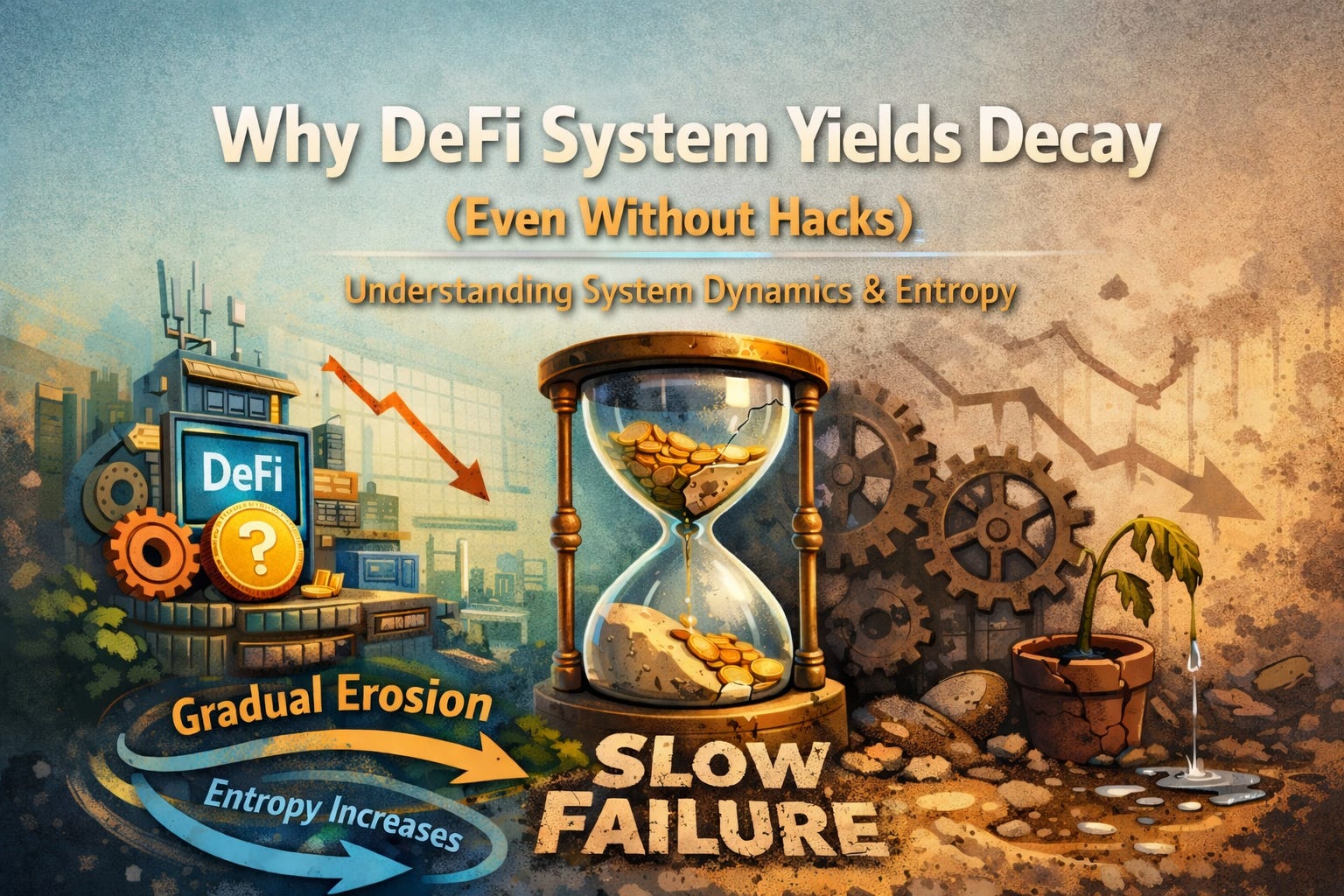
Most DeFi systems go out with a whimper rather than a bang. They don’t explode. They decay quietly, while functioning as designed.
This is not a problem code audits will catch. It is not primarily a governance failure. It is structural.
Users watch total value locked (TVL) rise, fees accumulate, and dashboards confirm system health while the returns they’re bragging about become steadily unsustainable. By the time decay is obvious, value has already transferred. The system worked. The users lost.
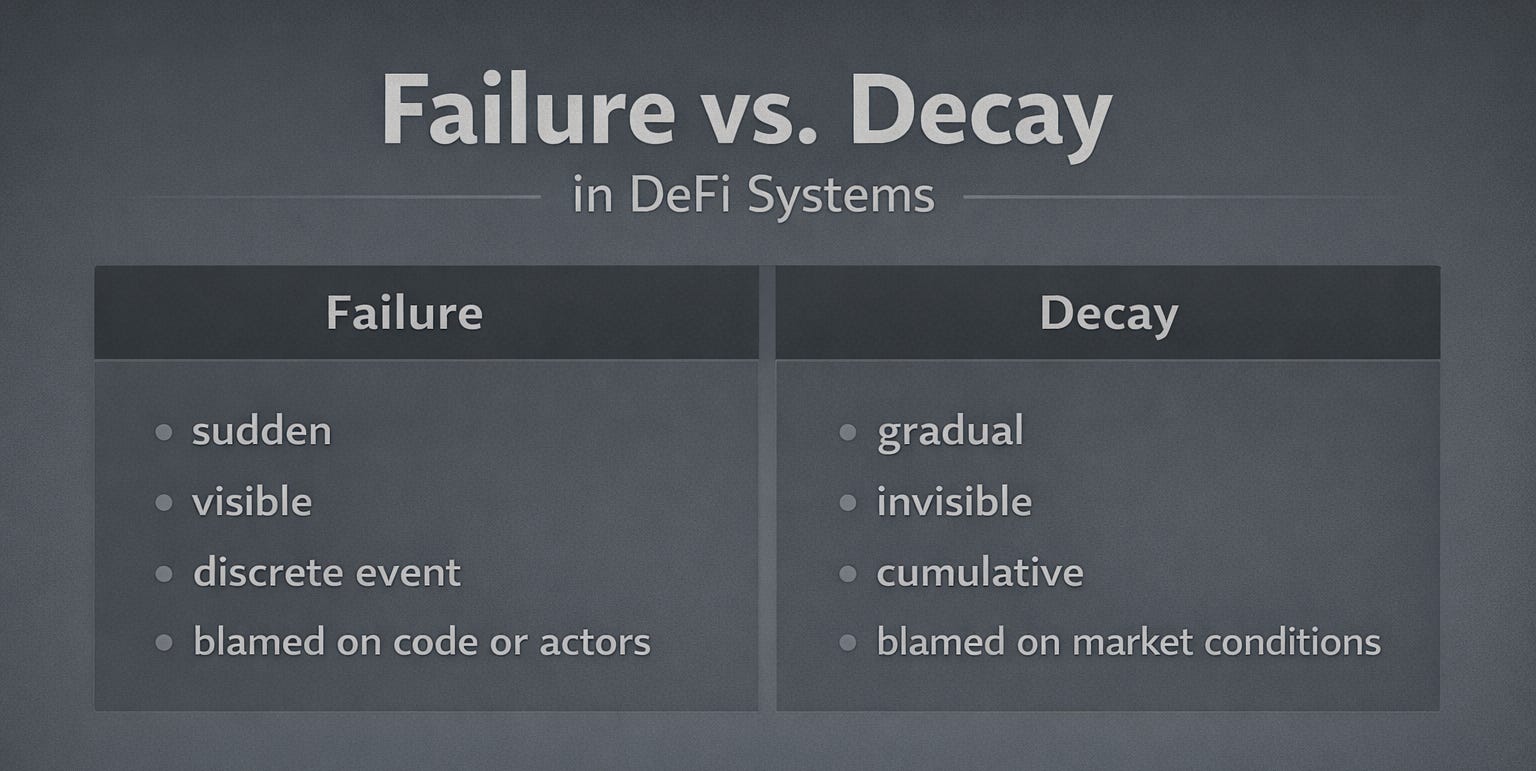
Failure vs. Decay: Two Different Threat Models
People expect DeFi failure to look like:
exploits
oracle manipulation
governance attacks
smart contract bugs
Those are visible events. Media post-mortems abound. Users gossip about what all broke.
Decay looks different:
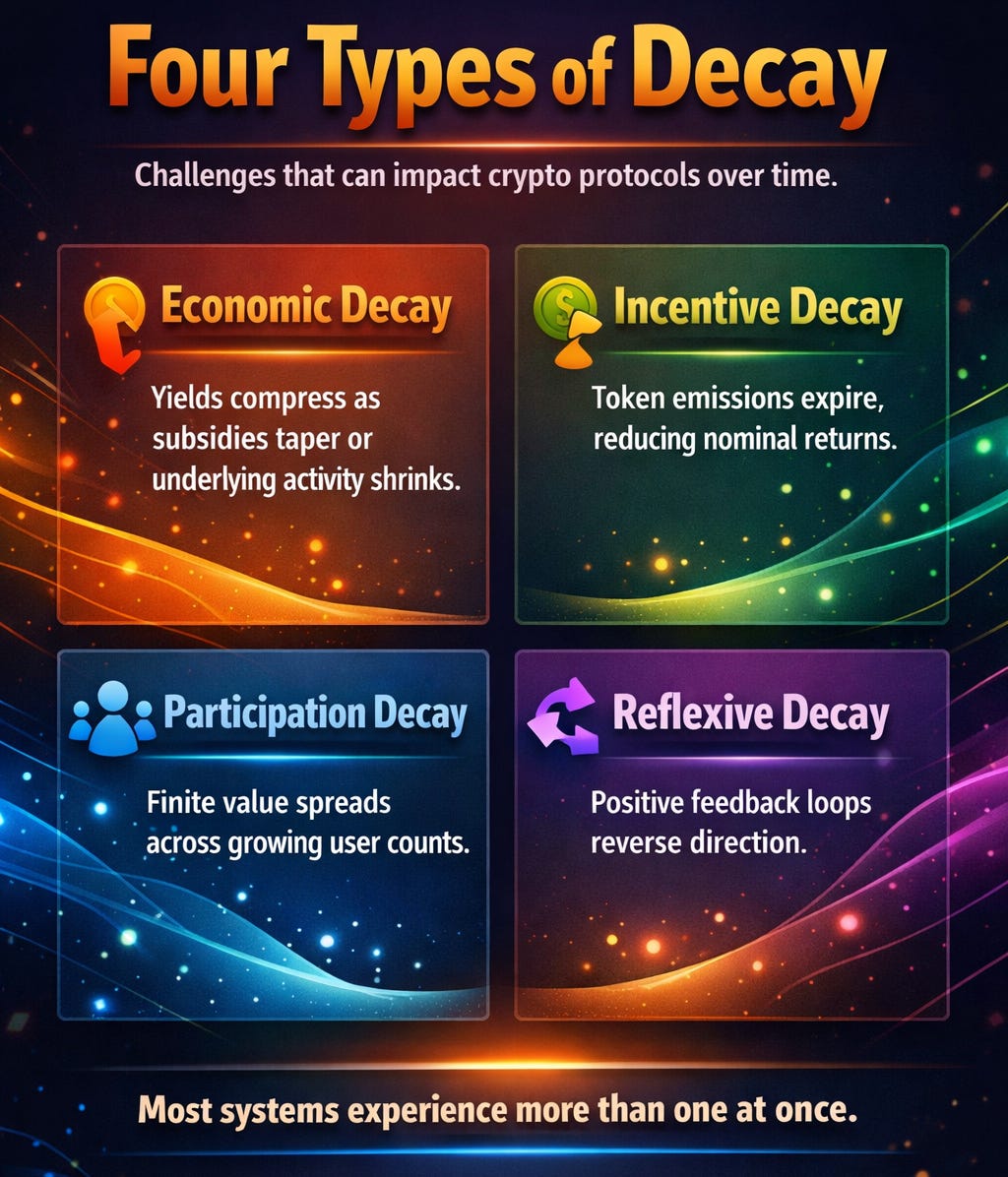
yields compress gradually
token incentives taper
liquidity migrates
participation economics shift
The system continues operating. Users continue earning. But the economic foundation erodes beneath stable surface metrics.
Audits provide confidence in code correctness. Uptime proves chain/protocol reliability. But neither metric can measure whether your returns will look the same in six months.
Code Correctness Does Not Ensure Outcome Durability
A protocol can execute flawlessly while the economics supporting it shift under your feet.
Consider:
Lending markets function perfectly while auto-calculated interest rates compress to unworkable levels
Liquidity pools execute swaps correctly while impermanent loss (IL) accumulates
Governance votes pass while voter turnout collapses
Yield aggregators compound rewards while those rewards lose purchasing power
The system behaves as programmed. User outcomes deteriorate anyway. These are not exceptions.
Incentives outlive initial conditions.
Early participants receive subsidized returns funded by token emissions or promotional budgets. Late participants receive whatever the underlying activity generates, often far less.
The protocol did not lie. The initial design assumptions expired. The subsidies, as they always do, went away.
Design assumptions have shelf lives.
Protocols launch assuming sustained user growth, stable or increasing token prices, predictable fee generation, and continued liquidity provision.
When these assumptions don’t hold up under real-world stress, the system (i.e. “the code”) continues executing. Returns decay to match the new reality.
No exploit occurred. No governance vote failed. The environment changed. The protocol adapted mechanically. When this happens, users absorb the financial loss.