
Governance Tokens as Economic Control Surfaces
From Token Votes to Economic Outcomes
Most people mentally file governance tokens as participation badges. You vote on proposals, participate in the community, and maybe the token goes up someday.
Governance is the ability to change setpoints that determine who gets paid, who gets diluted, and who takes a loss when something goes wrong. The token is the handle you hold. The handle is connected to actual economic plumbing.
A governance token is not a coupon. It is a control surface.
After reading this post, you should be able to look at any governance token and answer two questions: what economic levers can it actually move, and when those levers move, who wins and who silently pays.
The Control Theory Lens (in Plain English)
A control surface is something that changes the behavior of a system by adjusting a small set of parameters.
Thermostats and steering wheels are control surfaces. The important part is understanding what changes when you move them.
In DeFi, the parameters that governance can adjust are things like fees, reserve factors, emission schedules, collateral rules, interest rate curves, and supply caps.
The system has three components:
Sensors: what the protocol reads. Price, utilization, peg, TVL, liquidity depth, etc.
Actuators: what governance can change. Parameter updates, fee switches, emission gauges, treasury routing, etc.
The Plant: the actual economy, meaning the behavior that emerges after the parameter values change. User behavior, leverage demand, LP allocation, insolvency risk, etc.
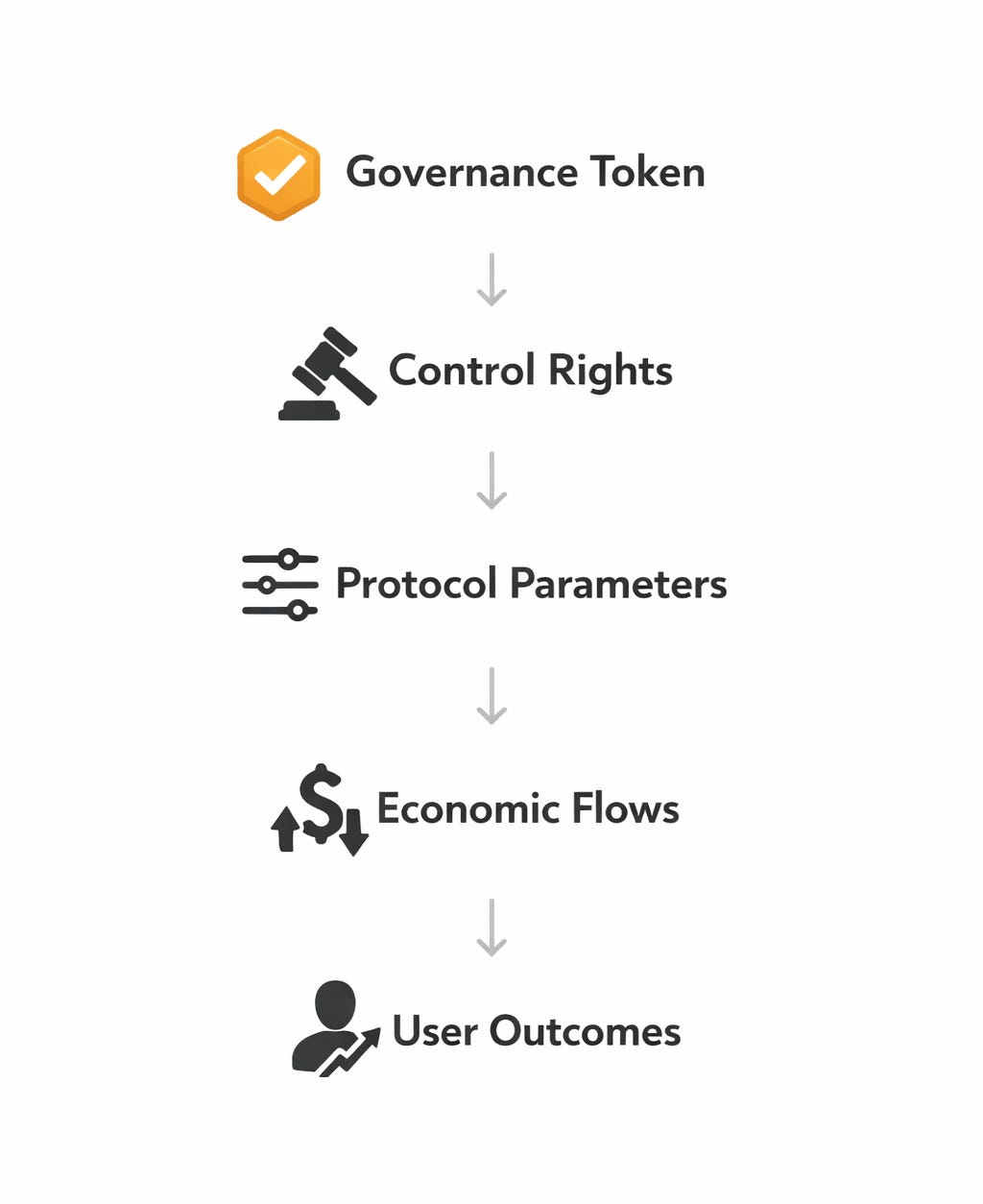
Governance is not “community vibes” on Discord. It is change control over the money machine.
Moondance Governance Classifications
The question is not whether a token has governance rights. The question is what the governance actually controls.
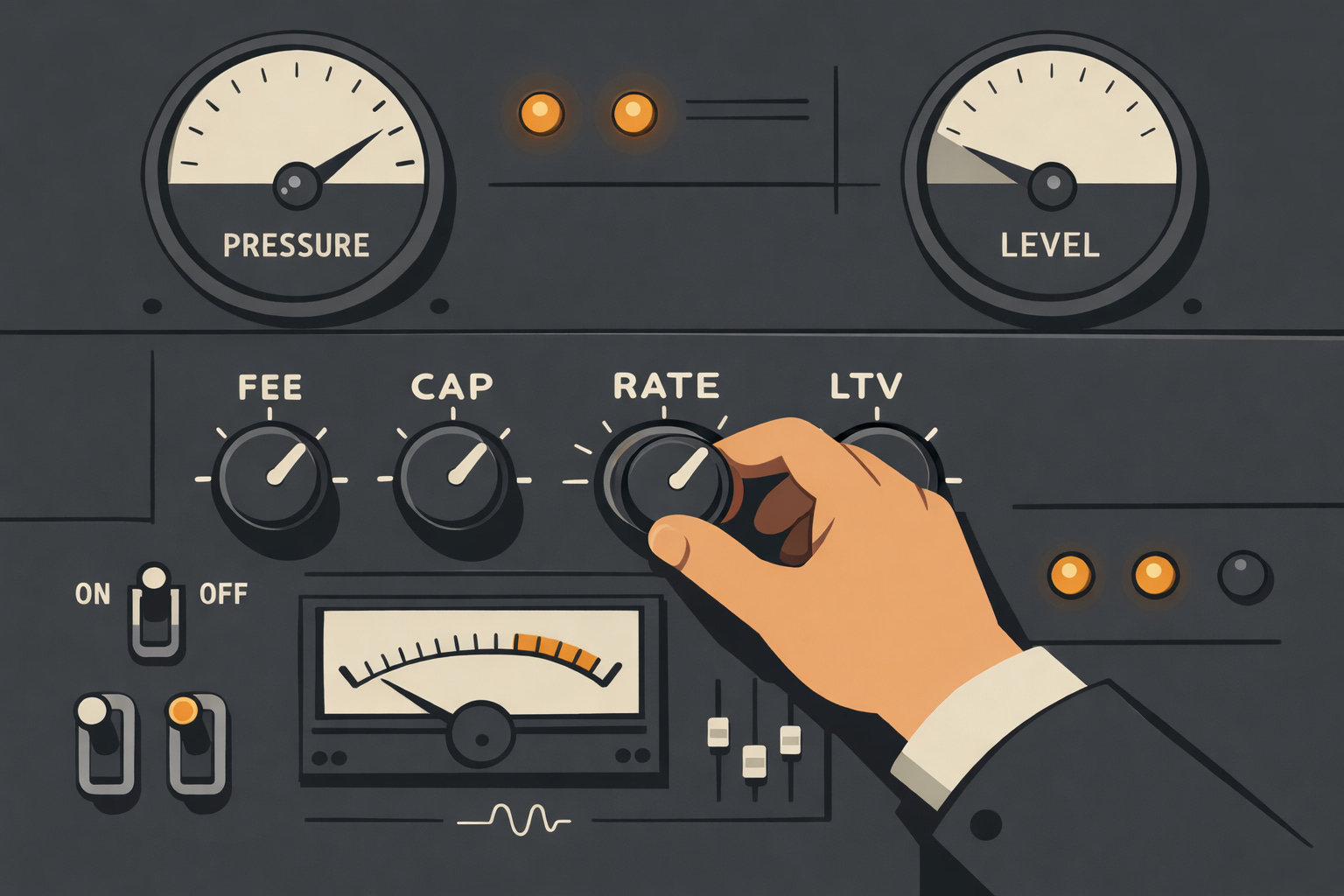
Not all governance tokens control the same things, and the risk profile changes depending on which lever(s) you’re holding.
Class A: Parameter tokens
Token holders can adjust knobs that directly alter user yields, borrowing costs, and risk levels. Reserve factors, LTV ratios, liquidation thresholds, interest rate curves. If governance raises a reserve factor from 10% to 25%, every supplier on that market immediately earns less interest. That is a real economic event, triggered by a vote.